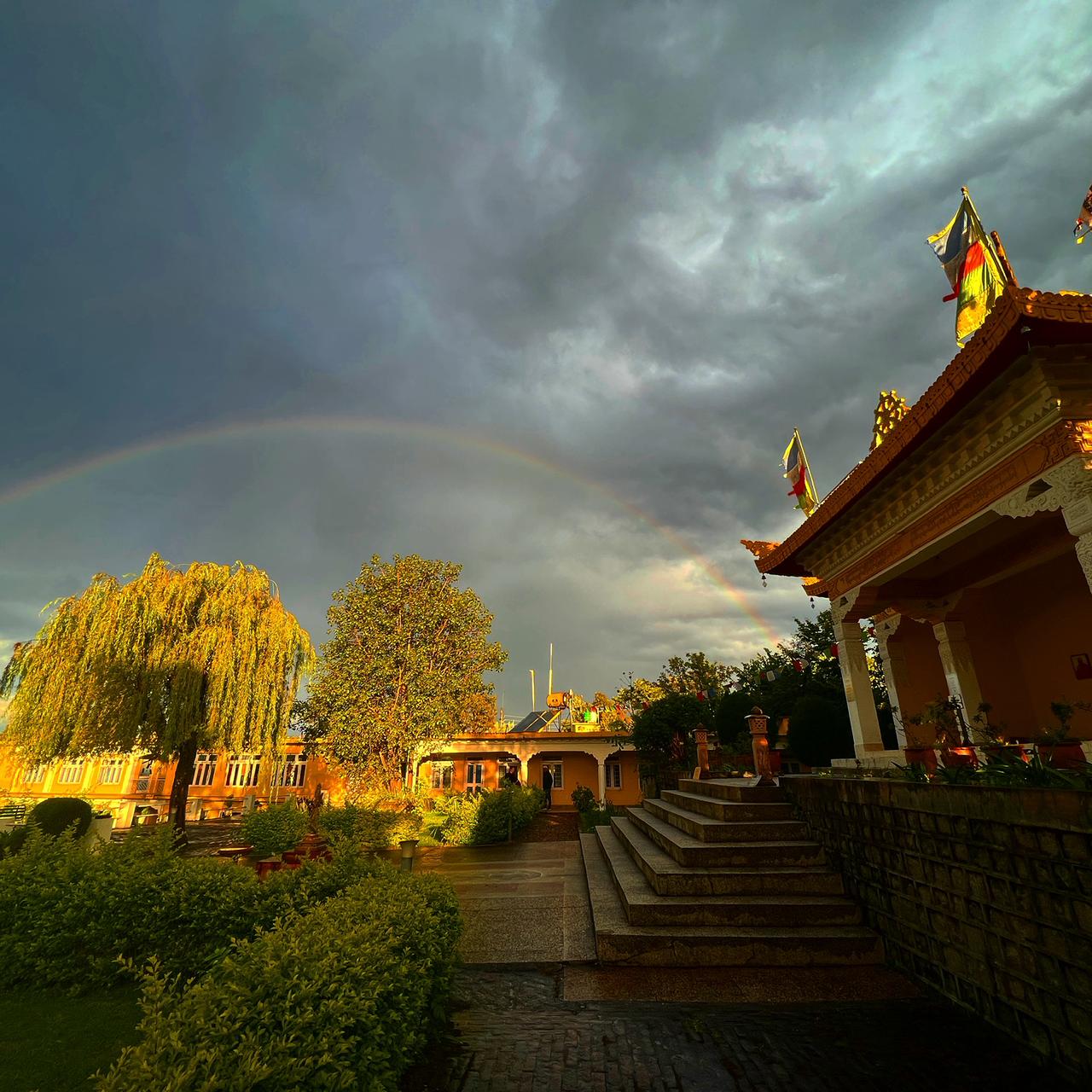
The Serkong Institute 4-Year Program led by Serkong Tsenshap Rinpoche, Geshe Tenzin Gurmyi, Dr. Atisha Mathur (PhD), and Geshe Chun Yin.
Serkong Institute 4-Year Program (in Collaboration with Deer Park Institute)
“I encourage Buddhists I meet to be 21st-century Buddhists, to discover what the teaching really means and to put it into effect. This entails listening and reading, thinking about what you have heard and read and making yourself deeply familiar with it”
– His Holiness the Dalai Lama
Vision
This program is tailored for individuals seeking a comprehensive grasp of Buddhist scriptures. In today’s fast-paced world, where time is limited for completing traditional Buddhist study programs, this program aims to encompass all essential subjects taught in classical Buddhist studies in a condensed format.
Subjects
The subjects have been carefully selected from the traditional curriculum to enable participants to thoroughly grasp (1) the essence of the Buddhist path, (2) its various aspects, and (3) the correct sequence of progression along the path. Without such comprehension, individulas aspiring to practice the Buddha-dharma may (1) mistakenly prioritize practices that do not lead to liberation, (2) correctly identify the path but, lacking a holistic understanding, focus solely on certain aspects, or (3) possess a comprehensive understanding but, without knowing the proper sequence, emphasize practices that are intended for later stages.
Didactic Method
The didactic method will follow the traditional approach of debate. Students will initially acquire the essential debating skills and subsequently apply them as they advance. This method cultivates a critical and unbiased mindset toward the teachings, empowering students to cultivate conviction and autonomy in their learning.
Duration
The program spans four years, with one module each year. Each module lasts two and a half months. Each module begins during the fall months.
Given the sequential structure of the program, where earlier subjects prepare participants for later ones, it is ideal for students to start with Module 1 and attend all four years. However, we will strive to accommodate individual circumstances.
Curriculum
1st year: Nov 16 2026 – Jan 23, 2027
Learning debate
Collected Topics (Dudra)
Signs and reasoning (Tarig)
Pramāṇavārttika – selected sections from the 1st chapter (Acharya Dharmakirti)
2nd year – Fall 2027
Basic Buddhist Concepts
Pramāṇavārttika – 2nd chapter
Buddhist Psychology (Lorig)
3rd year: Fall 2028
The Buddhist View
Tenets (Drubtha)
Madhyamaka – Candrakīrti’s Madhyamakāvatāra
4th year: Fall 2029
Stages of the Buddhist Path
*These dates are for the 2nd Batch of the program
Schedule
Daily Schedule:
7:30 Breakfast
10:00 – 11:30 Teaching
12:00 Lunch
2:00 – 3:00 Review
3:30 – 5:00 Debate
6:00 Dinner
7:00 – 8:30 Debate
Weekly Schedule:
M-F: Full Daily Schedule
Sat AM: Teaching Session
Sat PM: Free Time
Sun: Rest Day
Yearly Schedule:
The program spans four years, with one module each year. Each module lasts two and a half months. Each module begins during the fall months.
Teachers:
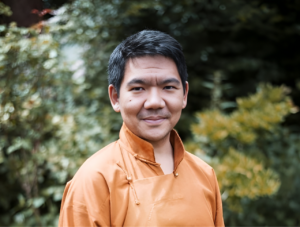 Serkong Tsenshap Rinpoche
At the age of two, Serkong Tsenshap Rinpoche (1984 – present) pointed to a photo of the recently deceased Assistant Tutor of the 14th Dalai Lama and said, “That’s me!” When he was about three years old, he was recognized by His Holiness the Dalai Lama as the incarnation of Kyabje Tsenshap Serkong Tugse Rinpoche (1914-1983), who was one of the seven master debate partners to His Holiness the Dalai Lama.
Rinpoche began his Buddhist studies and training at Ganden Jangtse Monastery in South India. After deciding to continue his work for the Dharma as a lay person, he completed his education at the Institute of Buddhist Dialectics in Dharamsala. On the advice of the Dalai Lama, Rinpoche completed three years of intensive study of English in Canada.
Currently, Rinpoche teaches at Dharma Centers worldwide, combining his profound Buddhist knowledge and practice with an understanding of the modern world. His captivating teachings are characterized by wisdom, humility and humor. Rinpoche considers it an honor to carry on the teachings and responsibilities of Tsenshap Serkong Tugse Rinpoche, striving to benefit others to the fullest extent possible.
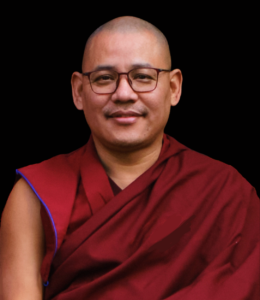 Gen Tenzin Gurmyi
A brief biography of my great spiritual friend:
The Rimé Geshe Tenzin Gurmyi
By Serkong Tsenshab Tulku
I first met my great spiritual friend, the Rimé Geshe Tenzin Gurmyi, when I was studying at the Institute of Buddhist Dialectics. At that time, Genla was studying in the Tantra class, while I was studying in the Madhyamaka class. Not only that, Genla and I had neighbouring rooms.
One morning, as I was leaving my room, it happened that Genla was also coming out of his room holding an offering vessel (phul phor) filled with golden beverage (gser skyems); at that moment, an equal sense of wonder and rejoicing arose in my mind that such a young student had such practices. From then on, I instinctively had to pay attention to Genla’s conduct as, additionally, I also felt that other students were showing him great respect. I noticed that Genla was gentle and subdued, and that he tended to keep to himself, deep in thought; still, I thought that if I got the chance to spend time with Genla, it would definitely be very transformative for me.
In summer, there was a tradition where the Madhyamaka and Perfection of Wisdom classes at the Institute of Buddhist Dialectics would study and discuss the Lord of Reasoning’s [i.e. Dharmakīrti’s] text the Pramāṇavārttika. Since the higher and lower classes could intermingle and meet for classes on the Pramāṇa texts, my class requested Genla to explain the assertions and clarify doubts related to the debate topics. He accepted, explaining to us how previous scholars clarified such doubts as well as explaining Genla’s own unique way of posing further questions; we felt like a pot being filled up to the brim and our minds were completely captivated.
That was my first Dharma connection with Genla and since then I have continued and still continue to taste the nectar of Genla’s profound explanations of many texts on both the Mahāyāna and Hīnayāna, Sūtra and Tantra, for which I continue to feel immensely fortunate.
As a starting point for the biography, I asked Genla questions regarding his parents’ names, who his teachers were, and so forth, and I requested permission to add some of my own honest first-hand observations, which I received permission to do.
Genla was born in 1976, in the Tibetan settlement of Phuntsokling in Odisha, a place blessed by many Paṇḍitas and Siddhas such as Ācārya Dignāga and so forth. His father was called Shedrub and his mother is called Yangchen Drolkar; he was the fourth of seven children.
From a young age, he received a thorough foundation in reading and writing the Tibetan alphabet from his father and his mother’s uncle, the renowned Aku Tsewang Chogdrub. Upon reaching school age, he began studying at the Tibetan refugee school at the settlement, where he successfully completed his modern primary education up to tenth grade. After that, towards the end of studying in the eleventh grade at the Tibetan School in Shimla, a dream awakened his past positive imprints and an irresistible wish to become a monk arose in him. In 1994, he enrolled in the Institute of Buddhist Dialectics in Dharamsala, entering the monastic life.
Genla’s initial hair cutting was given by the late Kyabjé Denma Locho Rinpoche and he received the complete Gelong ordination (the precepts of which are the foundation of the precious teachings of the Buddha) from His Holiness the Omniscient Dalai Lama, who is the embodiment of Ārya Avalokiteśvara in monastic robes, as his preceptor (mkhan po) and Kyabjé Jhado Rinpoche Tenzin Jungné Pelsangpo as his assistant preceptor (las slob), in the presence of a complete monastic community.
Although Genla had great interest in studying and contemplating the great treatises ever since he was young, his aspiration to practice meditation was even greater. As such, after about a year of attending the Institute of Buddhist Dialectics, the thought arose in his mind that maybe he had made a mistake in enrolling. It was then that he learned that the accomplished Drikung-Kagyu Lama Drubwang Konchok Norbu Rinpoche was residing in a retreat house near Tushita Meditation Centre, which is located on a mountain near His Holiness’s Residence. Genla went to meet Rinpoche and requested to be accepted as a disciple. However, Rinpoche asked, “Have you studied the texts?” To which Genla replied, “No.” Rinpoche then said, “‘Meditation without study is like climbing a cliff without hands.’ You should return to the Institute of Buddhist Dialectics and continue studying the texts. After you have studied the texts, I can help you.” With these words, Genla went back.
From then on, Genla’s efforts in his studies further intensified, like a blazing fire. Properly relying upon many spiritual teachers, such as Geshe Jetsun Losang Gyatso, Geshe Damchö Gyaltsen, Geshe Jangchub Tsultrim, Gen Gyatso, Geshe Könchok Wangdü, Geshe Dorjé Damdul, Geshe Losang Tenpa, and Geshe Thubten Sönam, Genla persistently and sincerely applied himself to the study and contemplation of the five great treatises and the textual systems of secret mantra at the Institute of Buddhist Dialectics, thereby bringing his studies to completion.
Moreover, Genla engaged in his non-sectarian study and contemplation of the various philosophical views with the Early-Translation Nyingma Khenpo Tulku Chöku, the Sakya Khenpo Könchok Gyaltsen, and the Kagyu Khenpo Tsultrim Namdak.
lso without sectarianism, Genla received empowerments, transmissions, and practice instructions for the various tantric systems of the secret mantra vehicle, as well as instructions on mind training (blo sbyong), from His Holiness the Dalai Lama, Kyabjé Taglung Tsetrul Rinpoche, Kyabjé Garjé Khamtrul Rinpoche, Kyabjé Denma Lochö Rinpoche, Kyabjé Ganden Trisur Rizong Rinpoche, Sakya Gongma Trichen Rinpoche, Drikung-Kagyu Kyabjé Garchen Rinpoche, Kyabjé Lama Relchok Rinpoche, the Nangchen Lama Kyabjé Karma Nyendrak Rinpoche, Kyabjé Minling Trichen Rinpoche, Kyabjé Trulshik Rinpoche, and so forth; thereby ripening his continuum.
Later, with the guidance of Geshe Thubten Pelsang on the Madhyamaka view, Genla engaged in the study and contemplation of the difficult points of Prāsaṅgika, eliminating misconceptions on the matter. Genla mainly focused on the Madhyamaka view as understood by the Great Je [Tsongkhapa] in terms of the suchness of dependent-arising. He investigated points such as whether or not the observed-objects of the afflictions conventionally exist, whether or not conceptual consciousnesses that are not grasping to true existence exist in the continua of persons who have not realised suchness, and discrepancies in the literal reading of Je [Tsongkhapa’s] excellent explanations regarding the Svātantrika view and so forth. Just like the Bhagavān said:
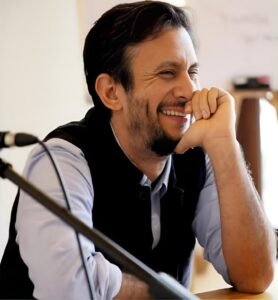 Atisha Mathur, PhD. Atisha was born and brought up in New Delhi, India. He pursued his undergraduate studies in Language and Literature of South Asia, with a focus on Tibetan studies, at the esteemed Orientale in Naples, Italy. His scholarly pursuits led him to the Central University of Tibetan Studies in Sarnath, India, where he was first immersed in the traditional approach to Buddhist studies.
Atisha then completed a rigourous 10-year study program at the Institute of Buddhist Dialectics in Dharamsalawhich emphasizes logic, debate, and the major Indian and Tibetan treatises. In 2024, he earned his doctoral degree in Buddhist Studies at L’Orientale in Naples, Italy.
Since 2019, Atisha has generously shared his expertise in logic and debate with groups of students from all over the world.
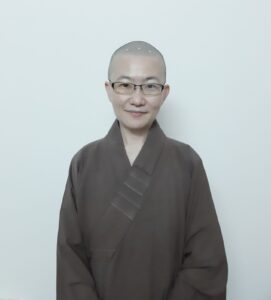 Geshe Chun Yin
Geshe Chun Yin graduated from the Nanyang Technological University in Singapore in 2001. She worked in an American bank for 4 years before taking up the robes under Ven. Sek Te Yuan in Pao Kwan Foh Tang in 2006. She received the Bikkhuni Ordination in Taiwan in 2008 and went to Dharamsala, India, to learn the Tibetan language in 2009. She began her studies in the rigorous 16-year Geshe course of the Institute of Buddhist Dialectics (IBD) in Dharamsala in 2010.
She completed the Prajnaparamita Studies (B.A. equivalent) in 2016, Middle Way Philosophy (M.A. equivalent) in 2019, Abhidharma, Vinaya and Non-Sectarian studies (M.Phil equivalent) in 2023 and graduated in 2025 as a Non-Sectarian Geshe (Ph.D equivalent).
Here is the link for the registration form: https://forms.gle/N5ACNhmFPEJjwVKy5